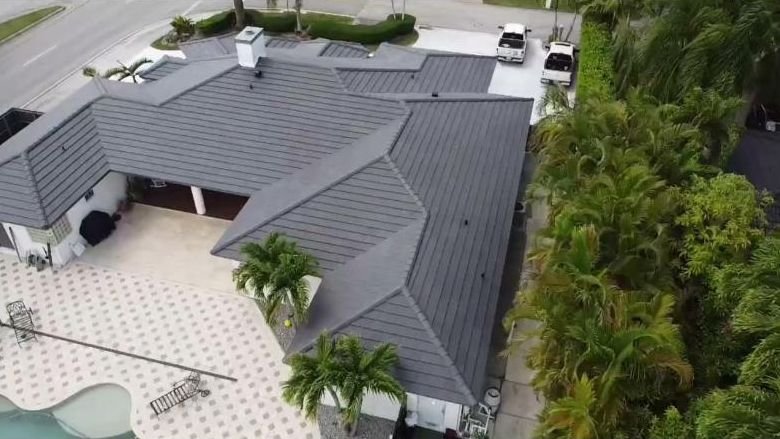
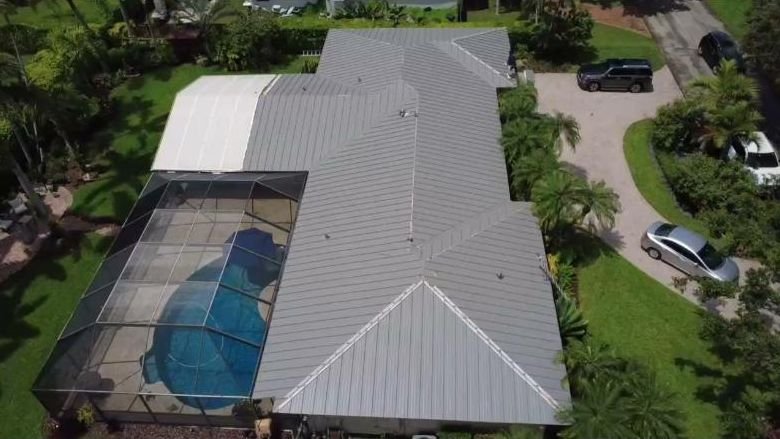
Replacing your roof in Miami? You’ve probably narrowed it down to tile or metal.
Both meet hurricane code and both outlast shingle. But they are very different roofs, and the right one depends on your house, your budget and how long you plan to stay.
At JBE Contractors LLC, we install both across Miami-Dade, Broward and Palm Beach. Here’s how we walk homeowners through the decision, and why I usually recommend metal.
How each roof handles hurricanes
Miami-Dade and Broward are in the High Velocity Hurricane Zone (HVHZ), which has the strictest roofing requirements in the country. Every tile and metal system we install there has to carry an approved product rating and be installed exactly to code.
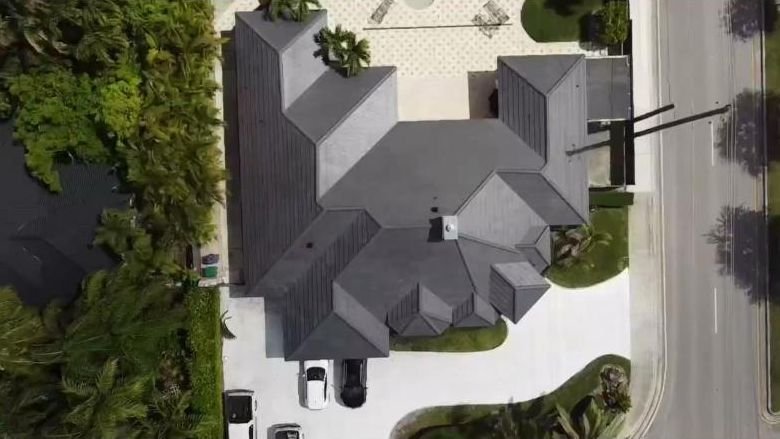
A standing seam metal roof is made of long panels locked together and fastened to the deck. With fewer individual pieces, there is less for high winds to catch and lift.
A tile roof is made of hundreds of heavy individual tiles, each attached with adhesive or fasteners. Properly installed tile holds up well in high winds, but flying debris during a storm can crack individual tiles.
Cracked tiles can usually be replaced one at a time.
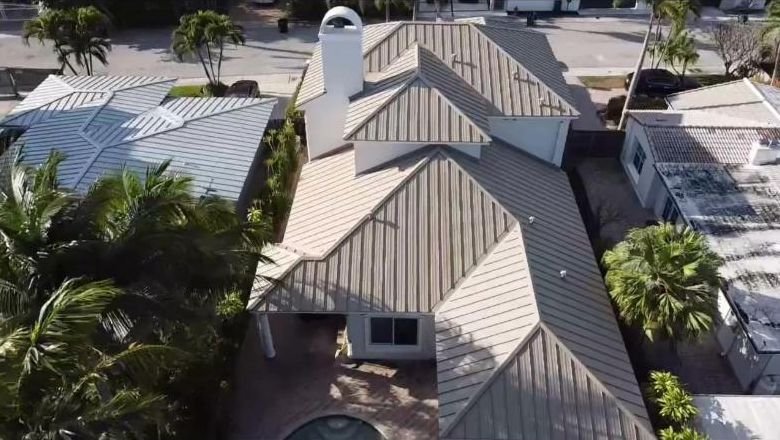
Bottom line: both roofs perform well in hurricanes when installed correctly. Installation quality matters more than the material.
Heat and energy bills
Metal roofs, especially in lighter colors, reflect much of the sun’s heat instead of absorbing it. In a climate where the AC runs most of the year, that can help keep your attic and your energy bills lower.
Tile also handles heat well. Its curved shape lets air move underneath, which helps insulate the house.
Light-colored tile works better than dark tile for keeping heat down.
How long each roof lasts
Both tile and metal are long-term roofs, and both typically last decades.
With tile, the tiles themselves can last a very long time, but the underlayment beneath them is what actually keeps the water out, and it wears out sooner than the tile. When a tile roof starts leaking after many years, the fix is often to lift the tiles and replace the underlayment.
With a standing seam metal roof, the panels and underlayment age together, and there is less to maintain over the years.
Salt air and coastal homes
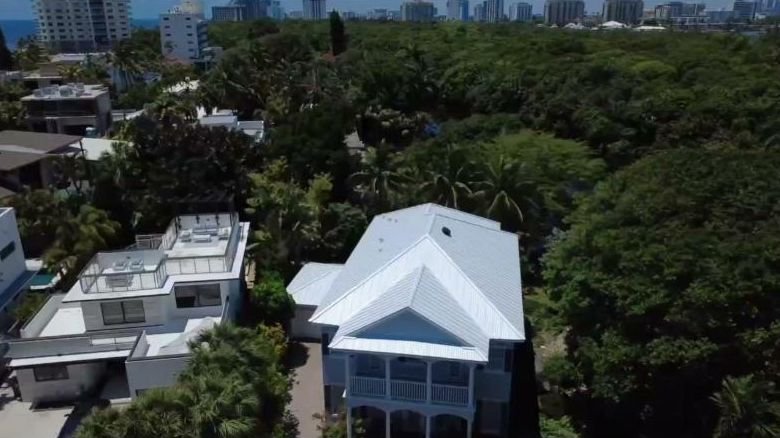
If you live near the water, in places like Miami Beach, Key Biscayne or Coconut Grove, salt air matters. Metal roofs near the coast should use aluminum or a coastal-rated coating, and fasteners need to be corrosion-resistant.
Concrete and clay tile hold up well to salt air on their own.
Not sure which roof fits your home?Free estimate. Permits included. Financing as low as 0% APR.*
Get my free roof estimateCost
Many homeowners assume metal is far more expensive than tile. In our experience in Miami, the price of a standing seam metal roof usually comes in close to a quality tile roof.
Your exact price depends on the size and shape of your roof, current material prices and how much deck repair is needed, so the only way to know for sure is an on-site estimate.
When you factor in maintenance and how long each roof lasts, metal often costs less over the life of the roof. Tile can also get more expensive if your house was built for shingles and needs structural work to carry the extra weight.
Weight and your home’s structure
Tile is heavy. If your house already has a tile roof, the structure was built for it.
If you’re switching from shingle or flat roofing to tile, a structural review may be needed first. Metal is very light and works on almost any structure, which makes it the easier upgrade from shingles.
Looks, resale and HOA rules
Tile is the classic Miami look, especially on Mediterranean and Spanish-style homes. Many HOAs in Miami-Dade require tile or only allow certain tile profiles and colors, so check your HOA rules before you decide.
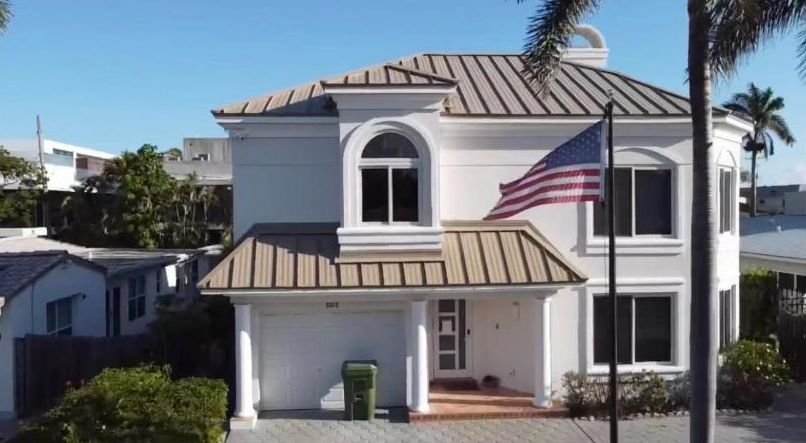
Metal gives a clean, modern look that suits contemporary homes and newer builds. It’s becoming more common in South Florida, but if you’re in an HOA, it may need board approval.
Noise
Worried metal is loud in the rain? Here it goes over a solid deck and underlayment, which dampens the sound.
Why I usually recommend metal
I install both, and tile is still the right call for some homes. But when a homeowner asks me what I would put on my own house, my answer is usually metal.
Here’s why:
- Durability. Long locked panels with no individual pieces to crack or blow off, which is what you want in a hurricane zone.
- Low maintenance. No broken tiles to replace and no lifting tiles years later to redo the underlayment.
- Longevity. A well-installed standing seam roof is built to last for decades with very little upkeep.
- Cost. The price is usually close to tile, so you get those advantages without paying much more.
If your HOA requires tile or you love the traditional Miami look, tile is a great roof and we will install it right. If you have a choice, metal is the one I recommend most often.
Juan Caceres, owner, JBE Contractors LLC
Quick comparison
Choose tile if
- Your home already has tile, or your HOA requires it
- You want the traditional Miami look
- You prefer the style of a Mediterranean or Spanish-style home
Choose metal if
- You want durability and low maintenance for the long run
- You want the strongest wind performance with the fewest pieces
- Lower cooling costs are a priority
- Your home was built for shingles and you don’t want added weight
- You have a modern or contemporary home
Frequently asked questions
Is a metal roof better than tile for hurricanes?
Both can be installed to meet Miami-Dade’s hurricane code. Metal has fewer pieces that can lift in high winds, while individual tiles can crack from debris.
A correctly installed roof of either type performs well.
Can I switch from tile to metal in Miami?
Yes. Switching from tile to metal lightens the load on your house.
You’ll need a permit, and if you’re in an HOA, board approval.
Does a new roof lower my insurance in Florida?
Often, yes. A new roof installed to current code, along with a wind mitigation inspection, can qualify you for insurance discounts.
Ask your insurance agent which features they credit.